Skip to content
Free standard shipping on orders over $69Every hat lists its age range, head size and brim width
Chapelin

Child safety

Built so it comes off when it has to.

Four structural rules run through every hat in the range. None of them is a marketing line: each one is a decision about how the hat is cut and sewn, and each one is stated on the product page for the hat in front of you.

Cord freeBreakaway fastenerNo small partsChemistry stated
Pull the strap and the buckle opens. The hat leaves the head instead of staying under load.

No cords, anywhere on the hat

The European standard on cords and drawstrings in children's clothing treats the head and neck as the highest-risk zone. For children up to seven it requires that zone to carry no cords, drawstrings or functional ties at all. Between seven and fourteen, free-hanging ends are not permitted and any tie must be a breakaway fastening.

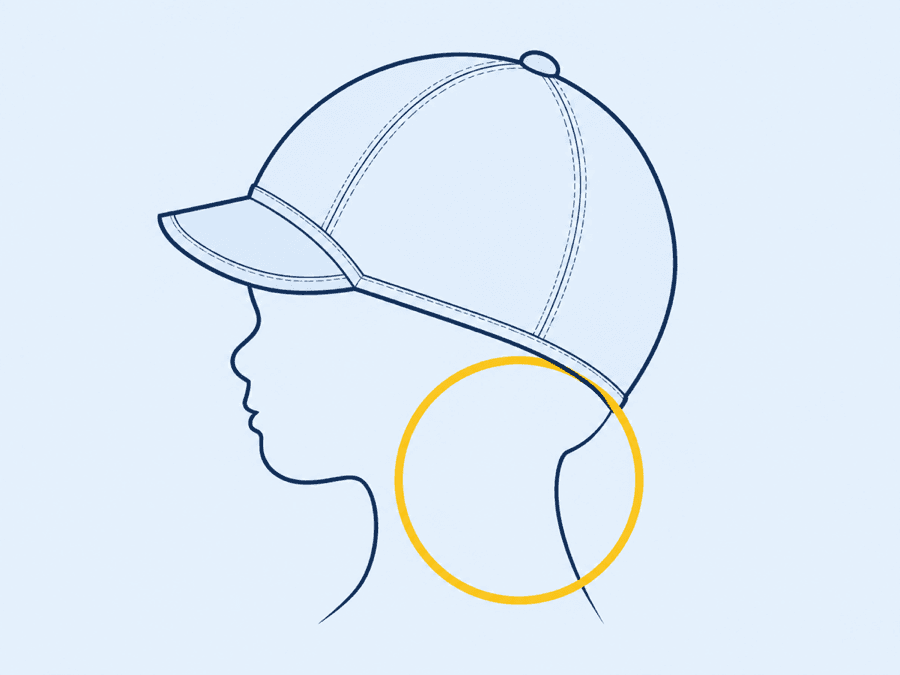
We do not draw the line at seven. No hat we make carries a cord or drawstring anywhere — not at the neck, not around the crown, not through the brim. It is simpler to build, simpler to check, and it removes the question entirely.

Diagram of a child's hat with the neck and nape area ringed to show there is no cord or drawstring there

The chin fastener separates under load

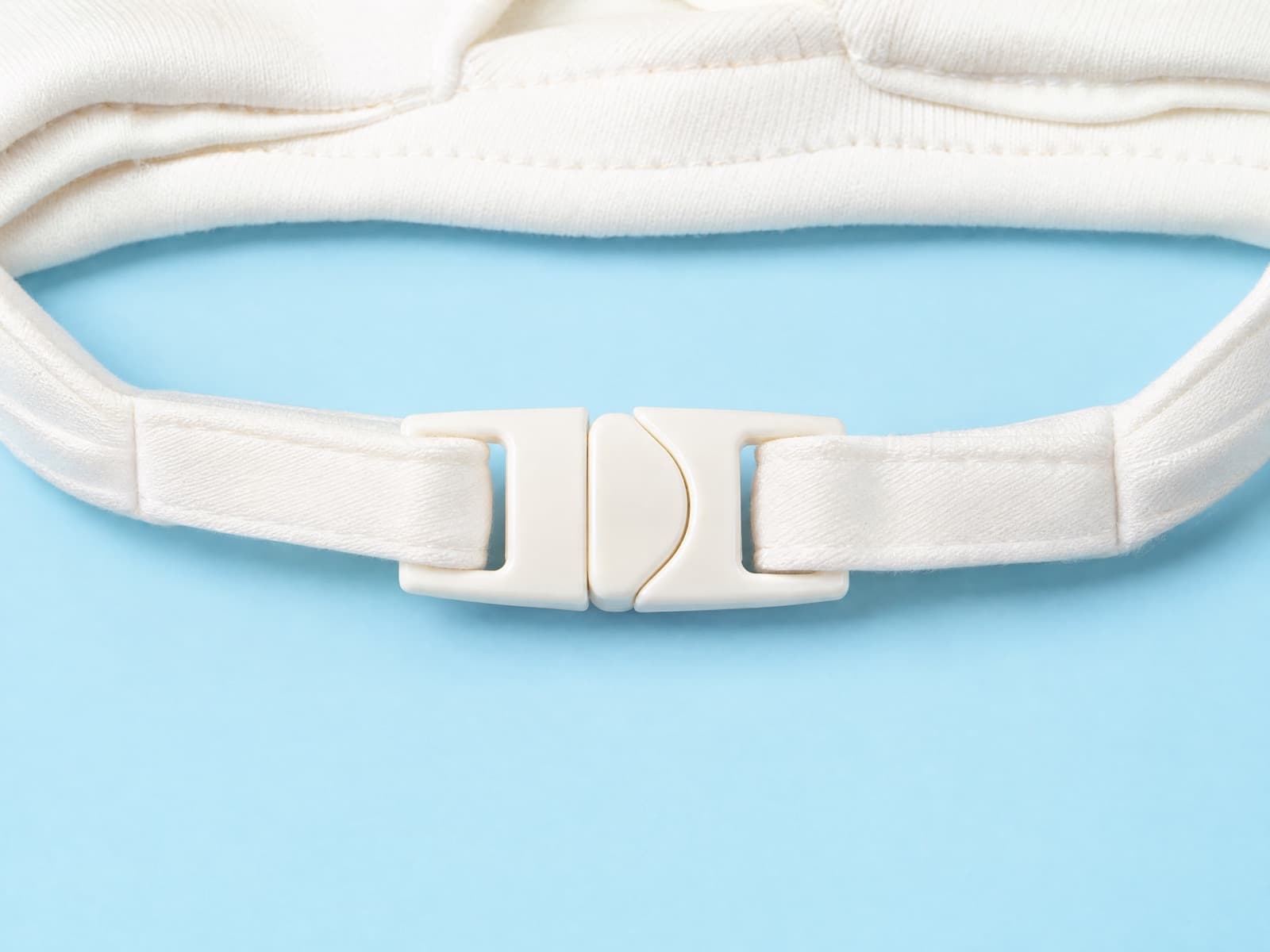
Where a hat has a chin fastener, it is a two-part buckle designed to come apart when pulled, not a knot or a tied ribbon. Pull it and the hat leaves the head instead of staying under load.

We publish the approximate force at which each one separates, in newtons, on the product page — between 22 and 28 N depending on the line. That number is a measured property, so you can compare it, rather than a reassurance.

The two-part chin buckle closed with the strap held taut

No detachable small parts on any line

Hats for under-threes may not carry detachable small parts, because a part that comes off is a choking risk. Above three, a decorative part is permitted if it passes a tensile pull test and carries an age warning.

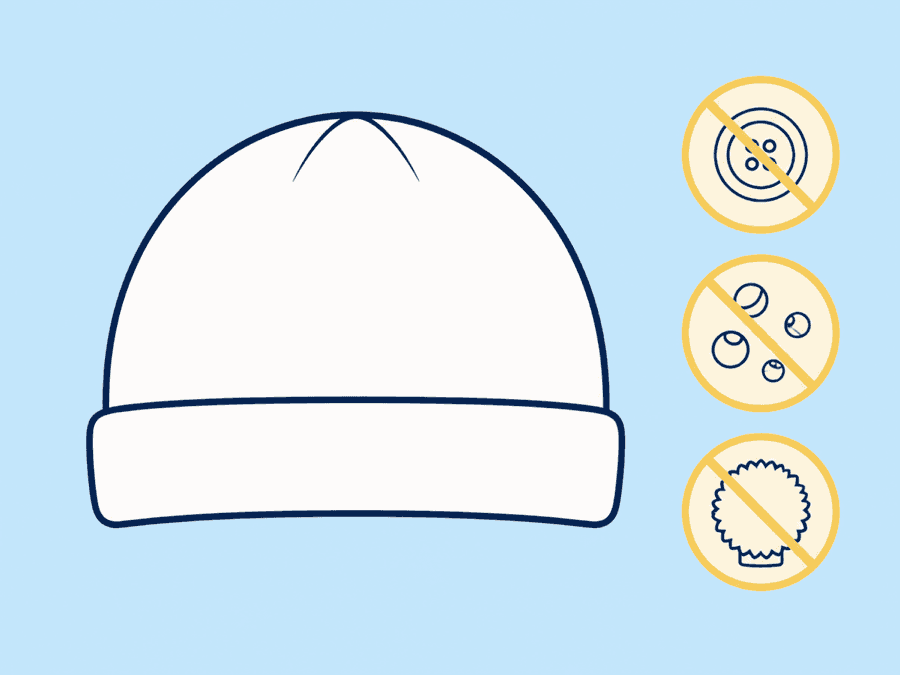
We ship none at all, on any line. No beads, no decorative buttons, no metal badges, no pom-poms. That is why you will not find an age warning on our product pages: nothing in the catalogue triggers one. If we ever add a decorative part, it will carry the test result and the warning together.

Diagram of a plain baby hat with crossed-out decorative buttons, beads and pom-poms beside it

Chemistry, stated per hat

Dyes conform to the REACH restriction on azo dyes that can release listed aromatic amines, with a limit of 30 mg/kg. Where a hat has no metal component in prolonged skin contact — which is all of them — the nickel-release restriction does not arise, and we say so rather than leaving a gap.

On the baby and toddler lines we also state free-formaldehyde control for textiles in direct contact with young skin. Each product page carries these three lines for that specific hat.

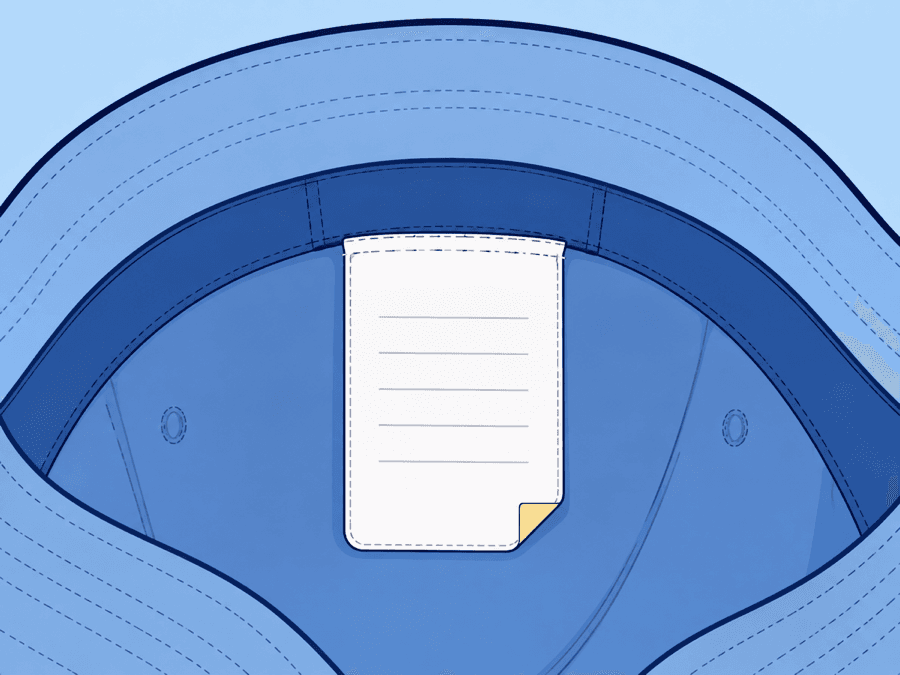
Illustration of a blank care and compliance label sewn inside a hat

What we deliberately do not say

The claims missing from this site are missing on purpose. Each one would be either regulated, unverifiable, or both.

Nothing about the sun

A hat that claims to shield the wearer from solar or ultraviolet radiation becomes personal protective equipment in European law, with conformity assessment, a declaration of conformity and CE marking behind it. We have not done that work, so we make no such claim. We publish the brim width in centimetres and let you decide what that is worth.
No blanket safety promises

You will not read that a hat is safe, guaranteed, or that it will not come off. Those are conclusions, and a conclusion cannot be checked. Every claim on this site is a structural fact you could verify with the hat in your hand.

No characters, no licences, no logos

Children's clothing is where trade mark and copyright infringement concentrates. We print no cartoon characters, no film or television properties, no club marks and no celebrity likenesses. The cloth is plain or woven, and every pattern we use is our own.

No health claims

Not hypoallergenic, not antibacterial, not therapeutic. Those are regulated claims and none of them belongs on a cotton hat.

Inside the hat

Three things you cannot see in a product photograph

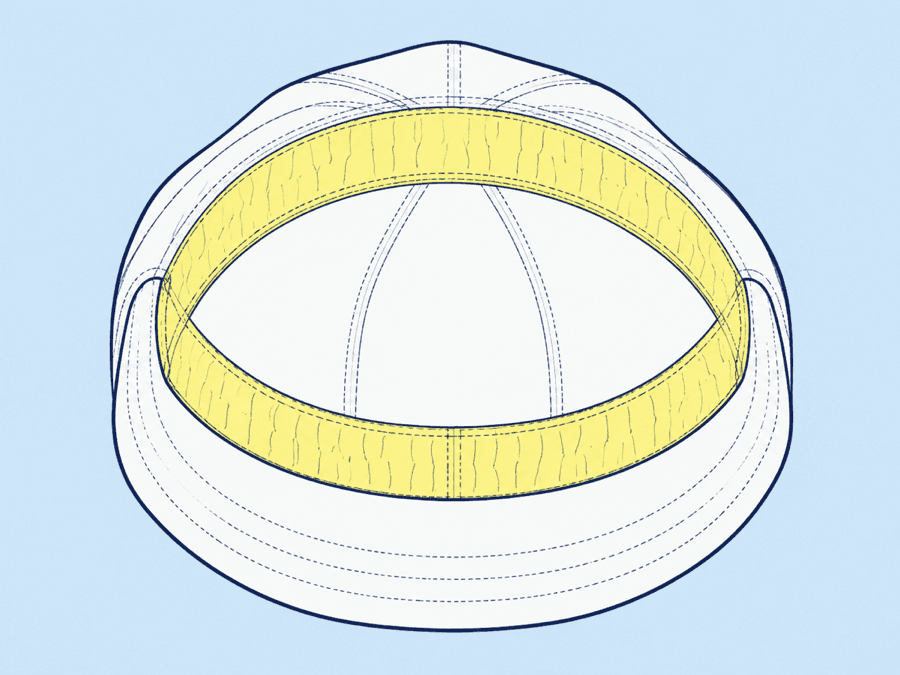
Cross-section diagram of the elastic band stitched inside the crown

The elastic inner band

Retention comes from a soft band sewn into the crown edge, spreading tension around the whole head rather than pulling at one point. It is what lets the smaller sizes hold without a strap at all.

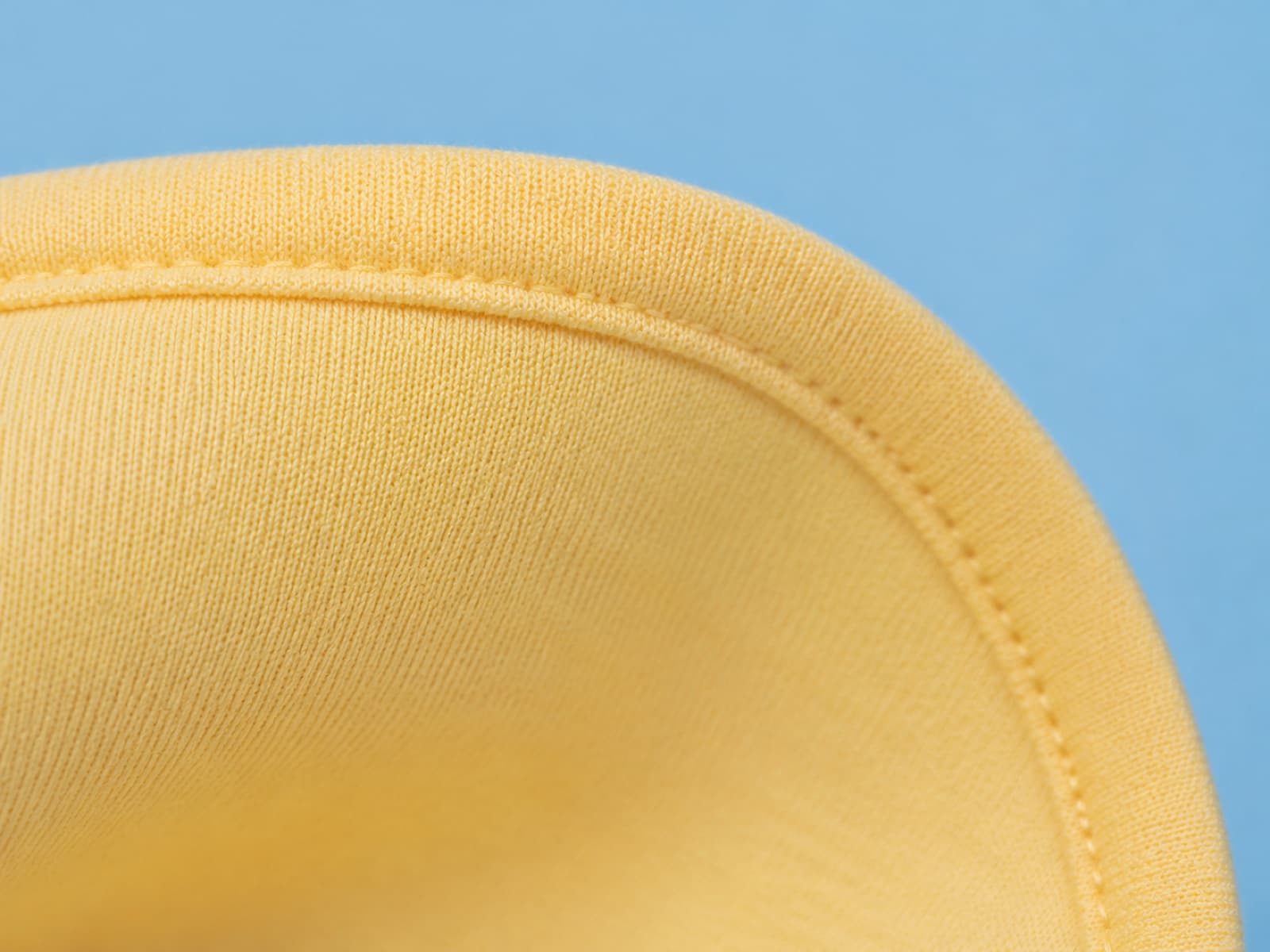
Macro photograph of a bound seam with even stitching and no loose threads

Bound seams, no loose ends

Every internal seam is bound or flat-locked. There are no raw edges and no trailing threads inside the crown, because a loose thread is the first thing a small hand finds and pulls.

Diagram of a webbing band running through a slider tab inside the hat

Adjustment that stays inside

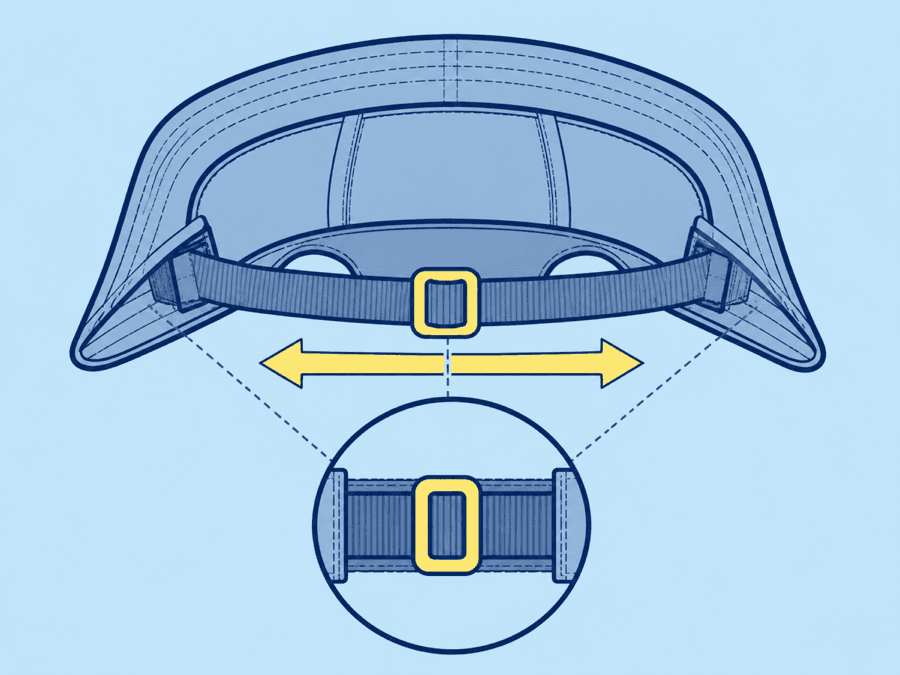
On the adjustable junior hat the webbing runs through a moulded slider within the inner band. Nothing hangs outside the hat, and the range is stated in centimetres rather than described as growing with the child.

Check any of this against the hat you are looking at

Every product page repeats the three structural lines for that specific hat, states the release force where there is a fastener, and lists the fibre composition in Spanish and English. If anything on a page contradicts this one, write to us and we will fix the page.